35
35 practice questions for the DMV permit test.
This is only a sample. More DMV practice questions are in the free app.
Get the appGet ready for your 2026 California DMV written test without the stress. Our free test lets you check how ready you are at your own pace, and you'll see your result at the end. The full bank of up-to-date questions is in the DMV Test Helper app, which syncs with our database automatically every time you open it. So whatever year you download it, you'll only study the rules that apply today.
Auto-updating question bank
Source: California driver's license rules (California DMV, Learner's Permits)


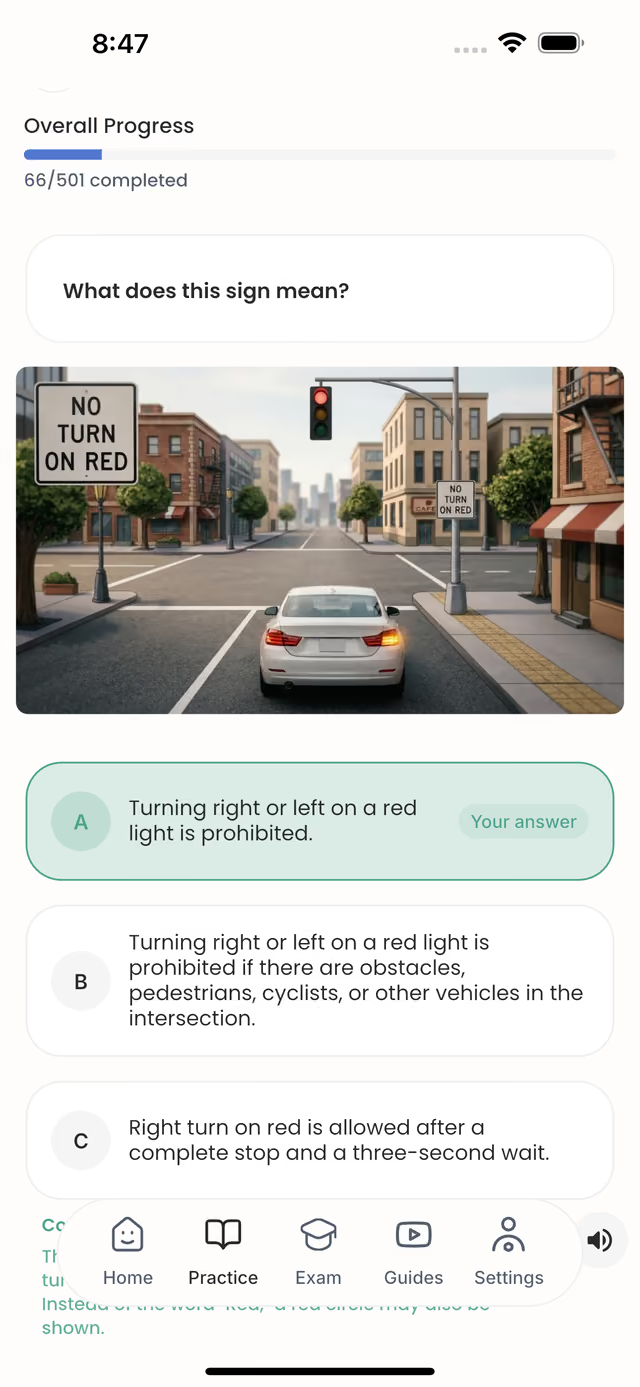
Take the free test at your own pace, get hints on the tricky questions, and see how ready you are for the exam.
 35 questions
 To pass: at least 28 of 35 correct.
 Find out right now how ready you are for the exam.
 Check how well you really know the rules of the road.
 Go over your mistakes at the end to make the rules stick.
Free
35 questions To pass: at least 28 of 35 correct.Free to use. DMV Test Helper is an independent app and isn't affiliated with any DMV.
Question
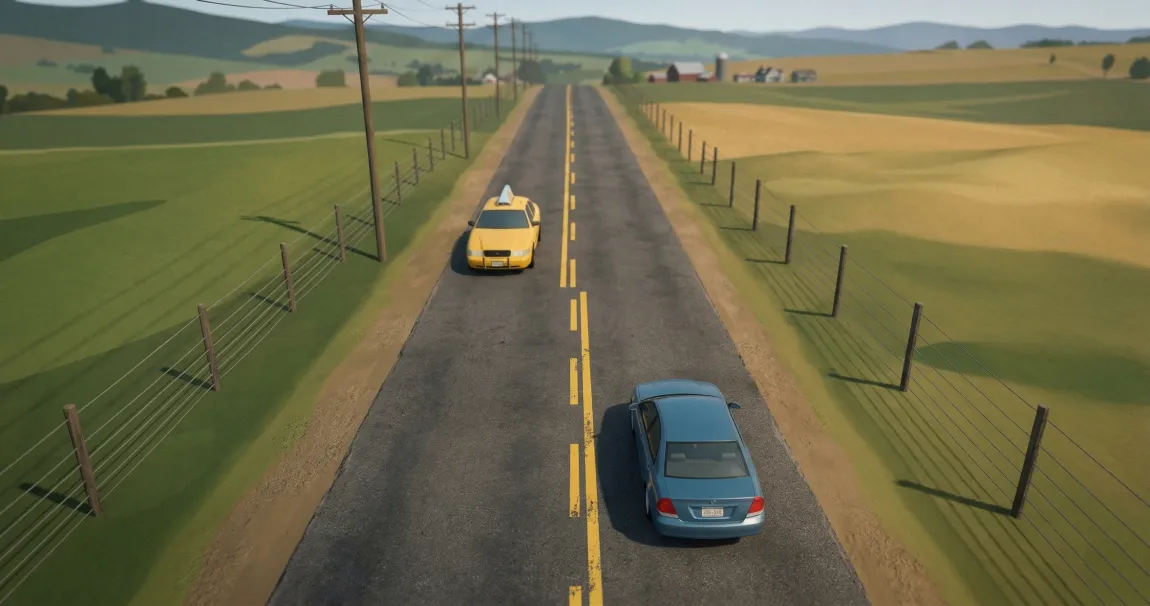
What do solid yellow lines indicate regarding passing?
Question 1 of 35
0%
What do solid yellow lines indicate regarding passing?
No passing lines are solid yellow lines on roads where traffic moves in opposite directions. The lines indicate zones where passing is not allowed. When the solid yellow line is on your side of the centerline, you may cross it to finish passing a vehicle you already started to pass before the beginning of the no passing zone. You may cross it to make a left turn into or from an alley, private road, or driveway.
What do these signs indicate?
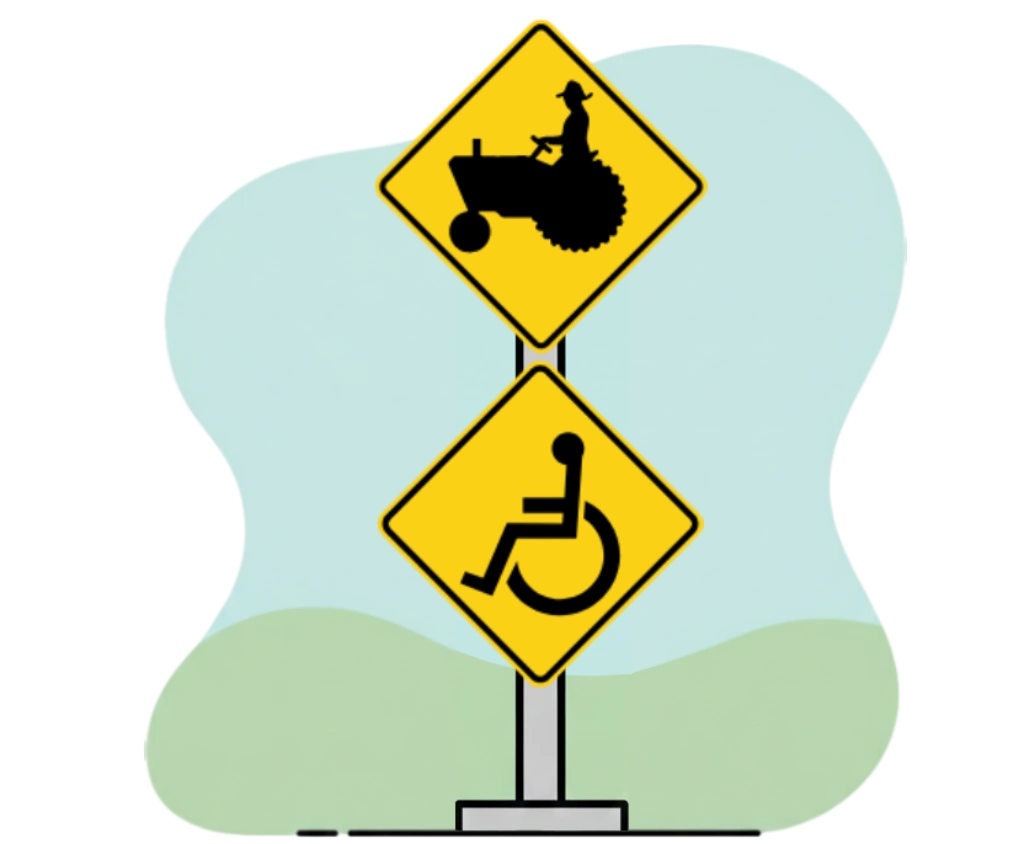
These signs alert drivers in advance of special areas where vehicles and pedestrians may be crossing.
When passing a large truck, especially at night, what should you do?
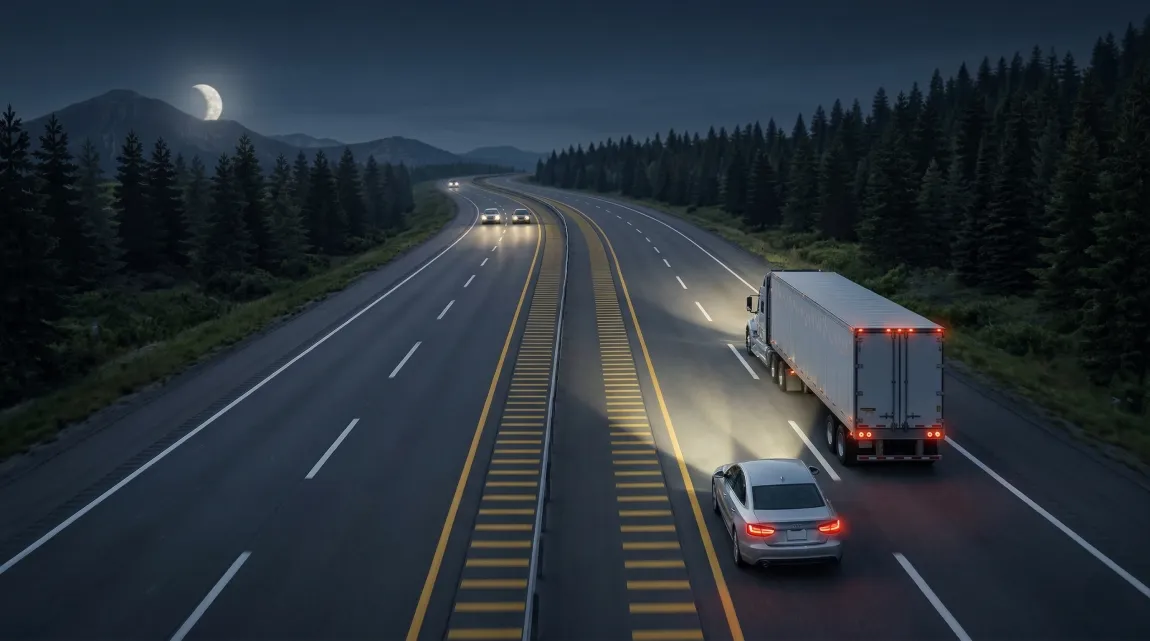
Pass on the left and do not stay alongside a large truck longer than necessary; its blind spots are large. At night, a brief flash of your headlights can let the driver know you are passing.
What does a solid and broken yellow line indicate?
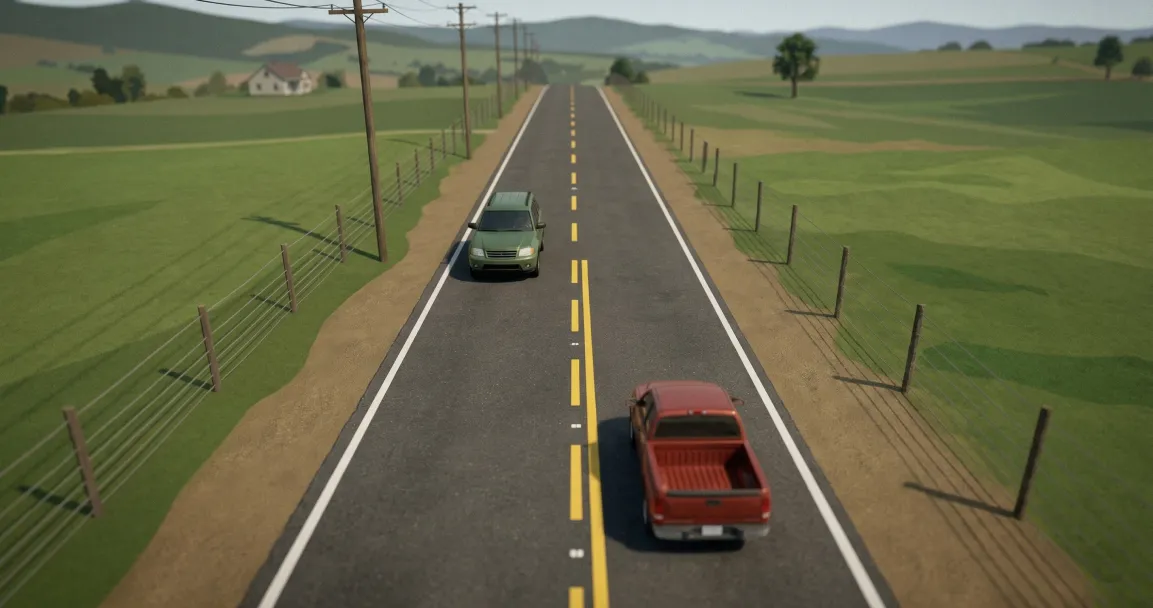
When there is a solid and a broken yellow line separating two lanes of traffic moving in opposite directions, you may pass only when the broken yellow line is nearest your lane.
What do these signs indicate?
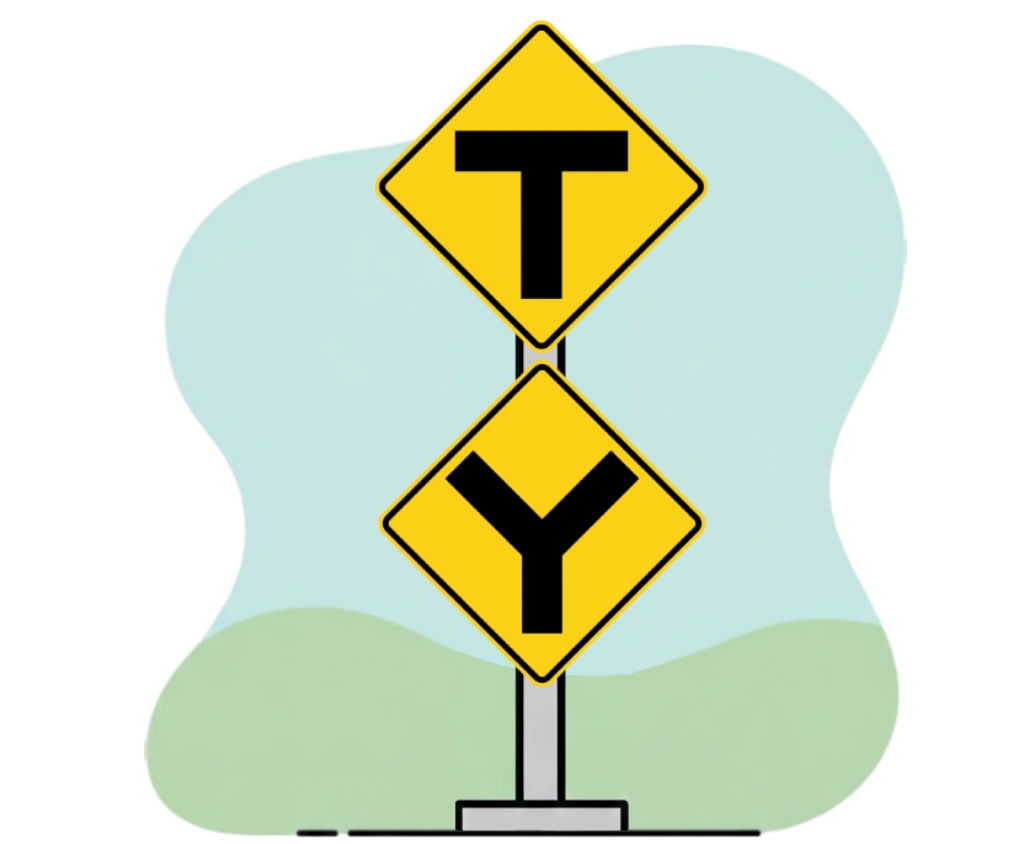
These signs warn about intersections ahead where there may be traffic or a need to turn right or left. A sign with the name of the intersecting road may also be posted.
When approaching a YIELD sign, what should you do to avoid a crash?
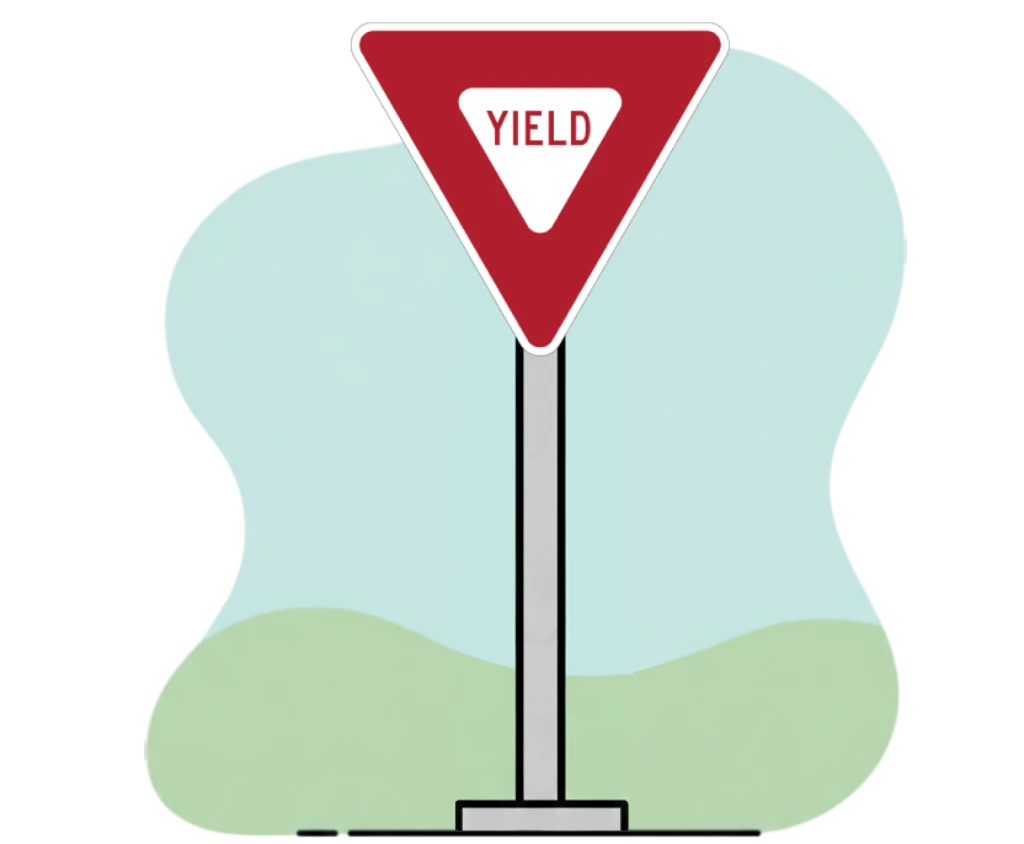
When approaching a YIELD sign, you should slow down or stop to avoid a crash.
You see this sign on a divided highway or freeway. Which vehicles are allowed to use the crossovers?
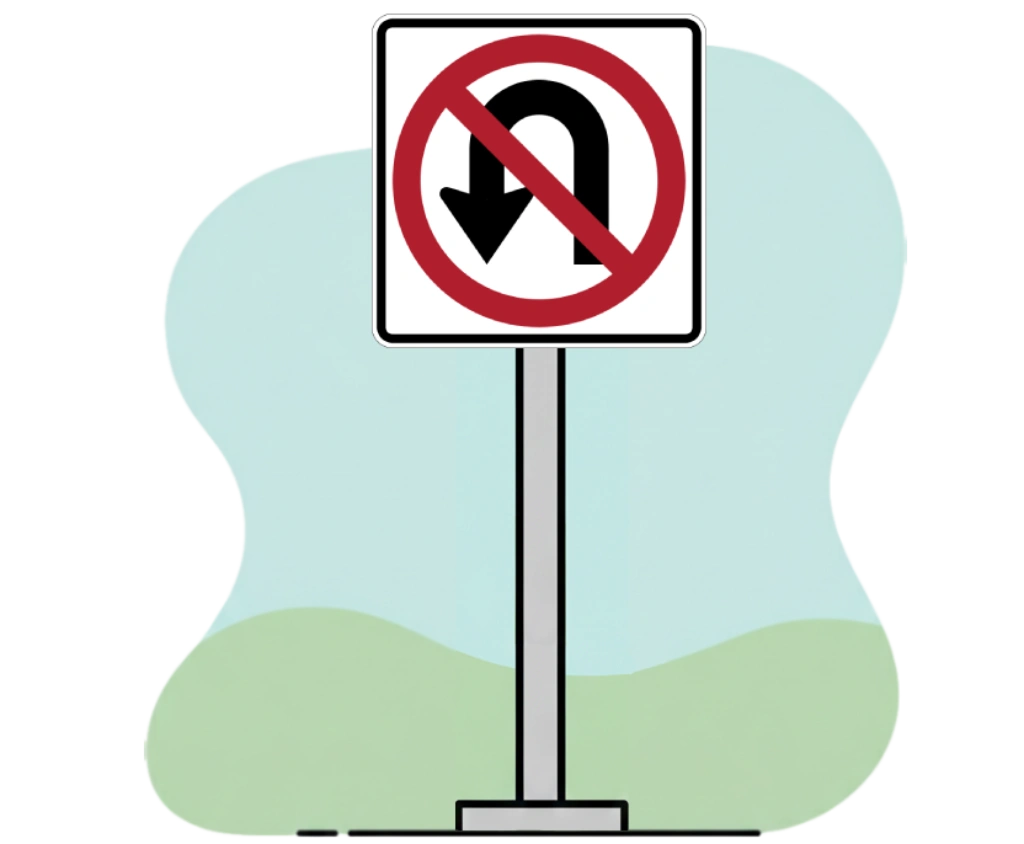
These signs are posted on divided highways or expressways. You may see one where there is an opening in the divided highway that leads to the other side. These openings are only for authorized vehicles, such as police cars, ambulances, snow plows, construction/maintenance equipment and other emergency vehicles. Other types of vehicles may not use this opening.
What safe distance should a driver maintain when following a motorcycle?
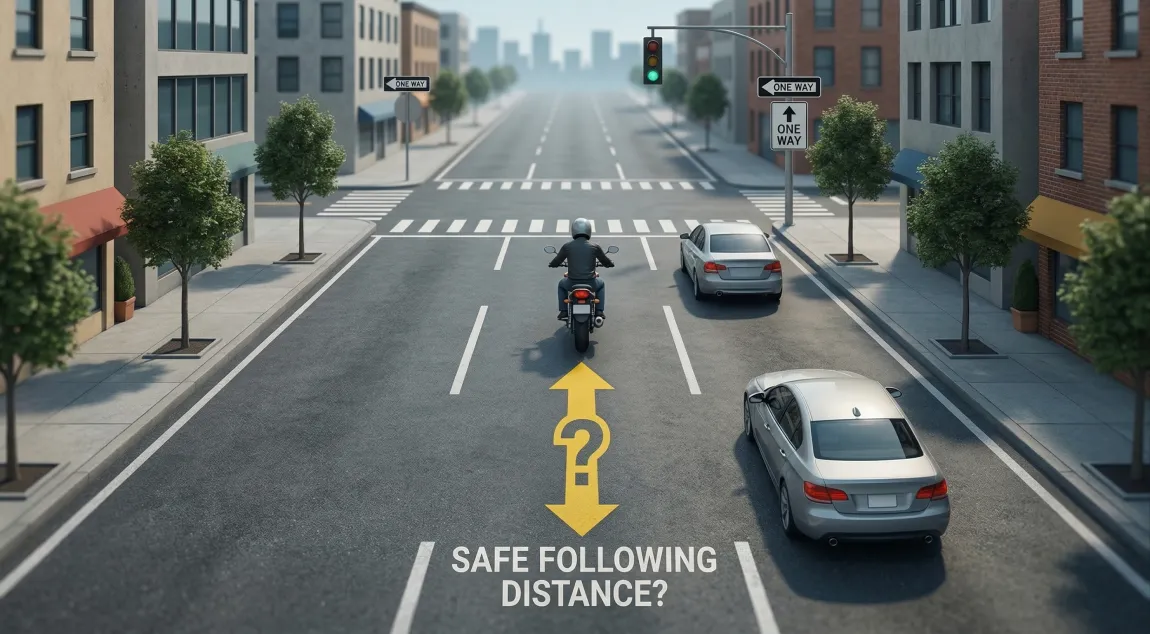
Leave a safe distance of three seconds. This space helps to avoid a collision with the motorcyclist in case of sudden braking or falling.
What do these signs indicate?
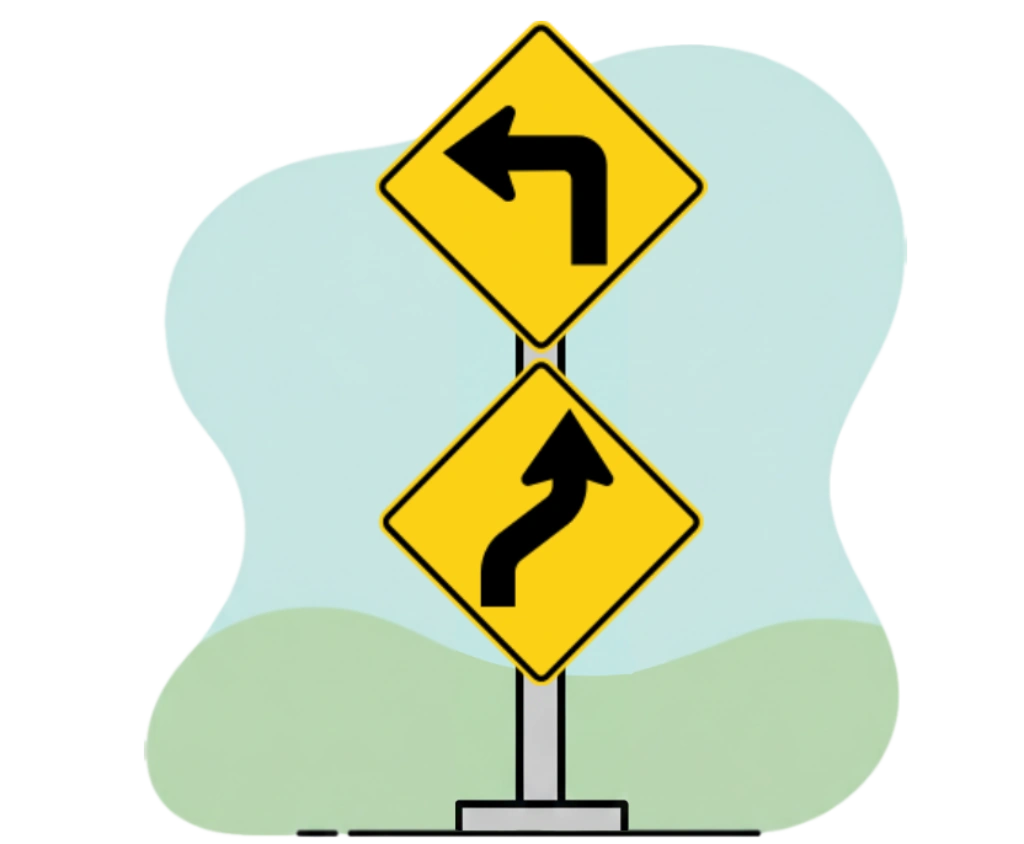
Signs indicating turns and curves warn drivers about upcoming changes in the road’s direction.
What does this sign indicate?
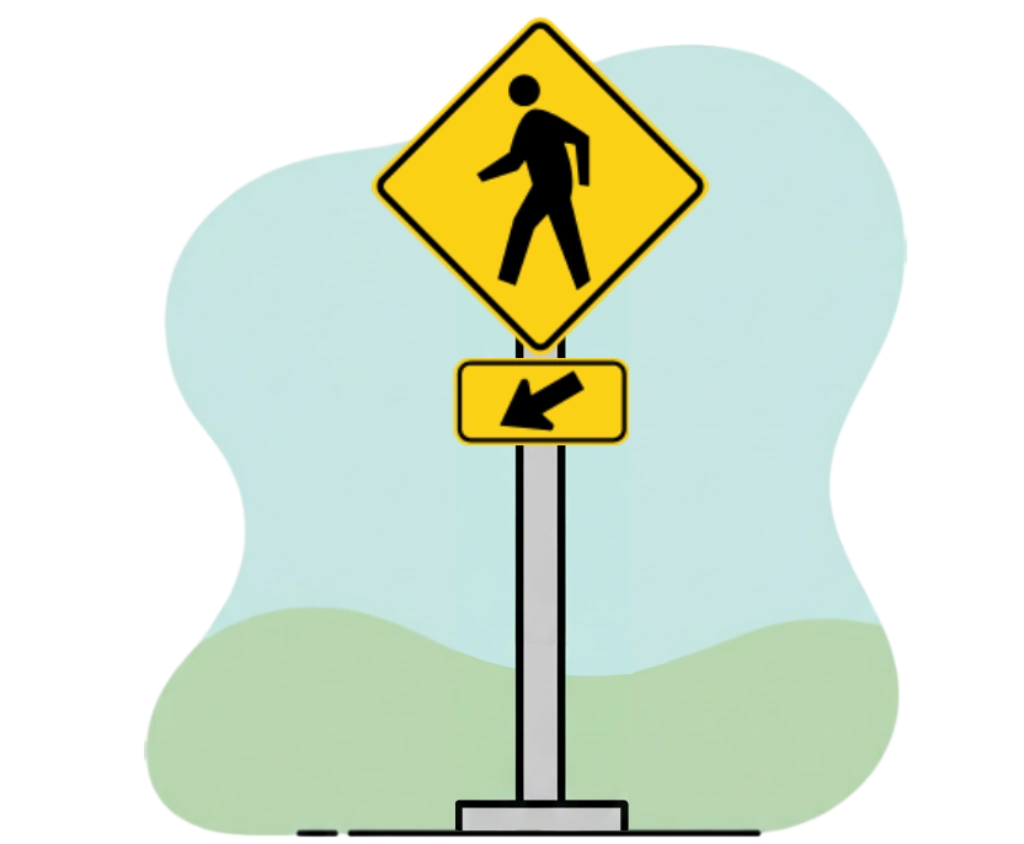
This sign tells you there is a crosswalk. Crosswalks are not always located at intersections, so you must watch both sides of the street for pedestrians. Pedestrian crosswalk signs may also be accompanied by a yellow flashing beacon located on the sign.
What do the arrow and "X" signals located above the travel lanes mean?
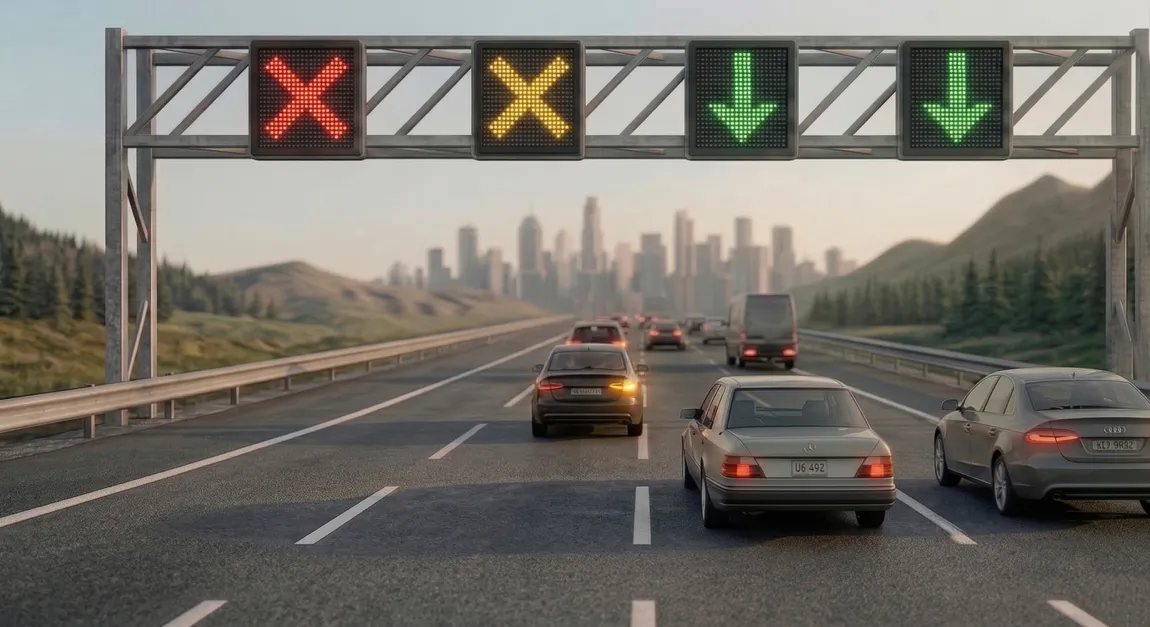
Signals above lanes regulate traffic flow. A red X means do not drive in this lane. A yellow X means the signal will soon turn red and you must move to another lane. A green arrow means the lane is open for driving. A flashing yellow arrow means the lane can only be used for left turns.
What does a vehicle displaying this sign indicate?
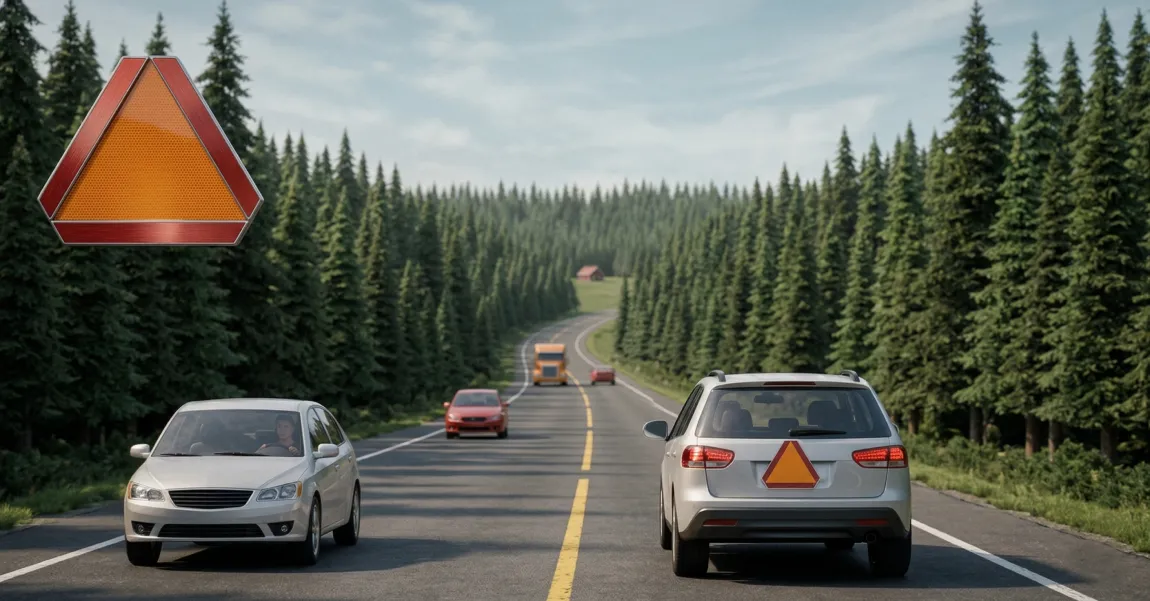
A vehicle displaying this sign is moving slowly. You must slow down and may pass only when safe and legal to do so.
What should you do when approaching a railroad crossing with a stop sign, flashing lights, or a lowered gate?
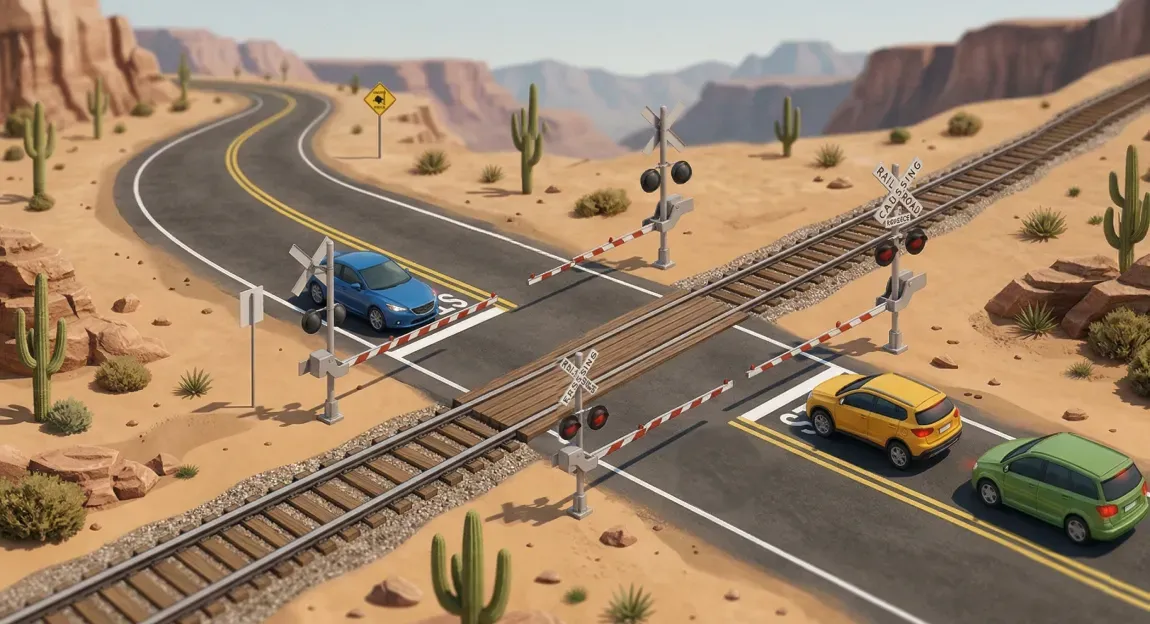
At a railroad crossing with active warnings or a stop sign, you are required to come to a full stop. You must stop your vehicle at least 15 feet away from the nearest track or gate. Wait until all warning signals have ended, the gate is completely up, and you are certain no trains are approaching from either direction before you cross.
Do you need to stop for an oncoming school bus on a multi-lane or divided highway?
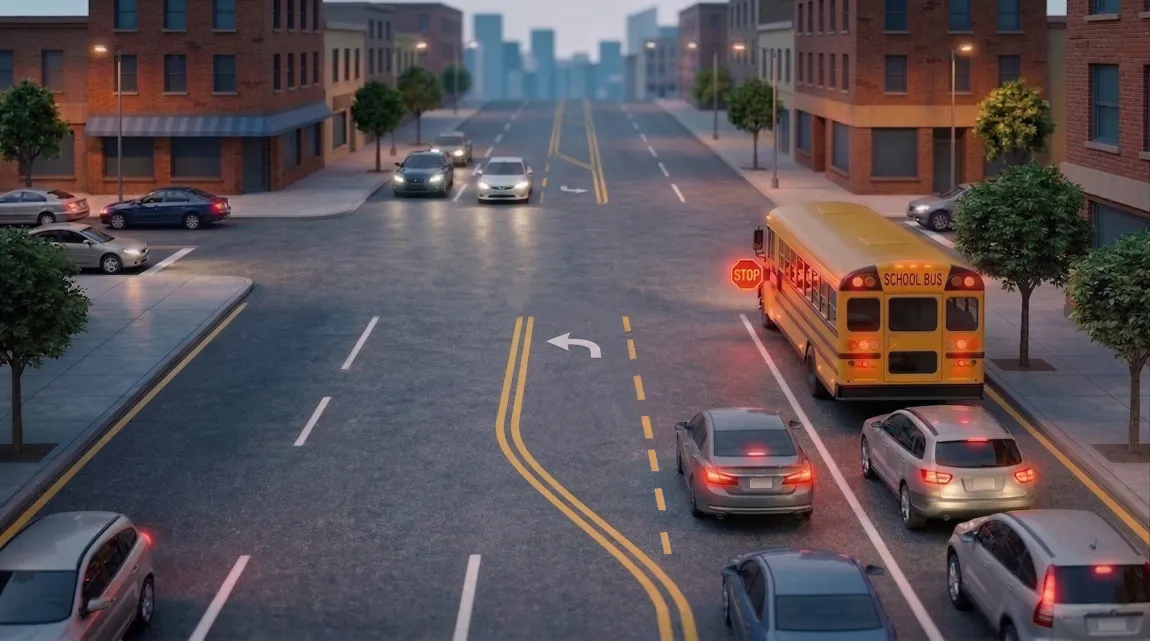
If the school bus is on the opposite side of a divided or multi-lane highway with two or more lanes in each direction, you do not need to stop.
When is a child allowed to be transported without a child safety seat or booster seat using a standard seat belt?
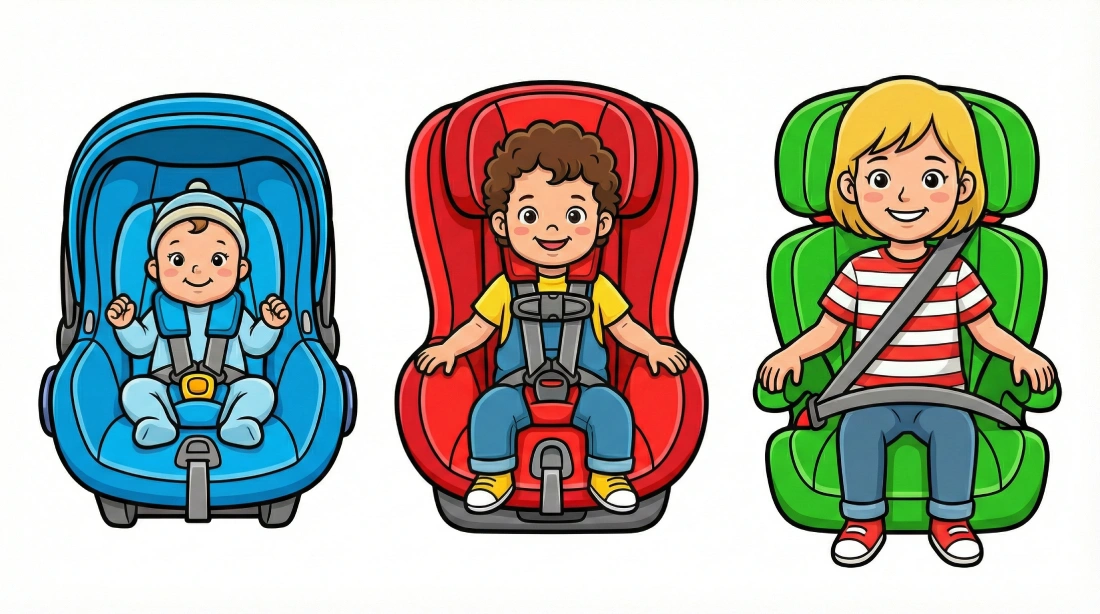
Children 8 years or older or at least 4 feet 9 inches tall may use a properly secured safety belt. Children under 8 years or less than 4 feet 9 inches tall must be secured in a child passenger restraint system in a rear seat
What does the sign indicate?
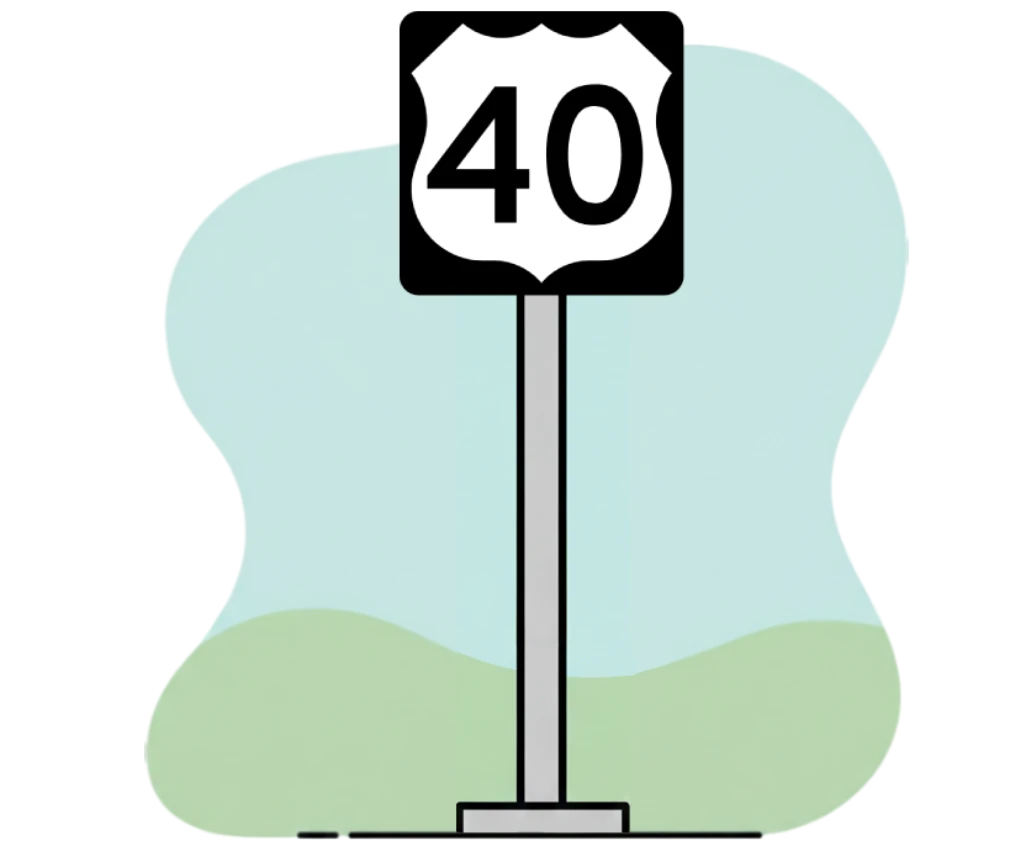
This shield marks a U.S. Route, a numbered federal highway that often crosses several states. Interstate highways use a different red-and-blue shield.
What does this sign indicate?
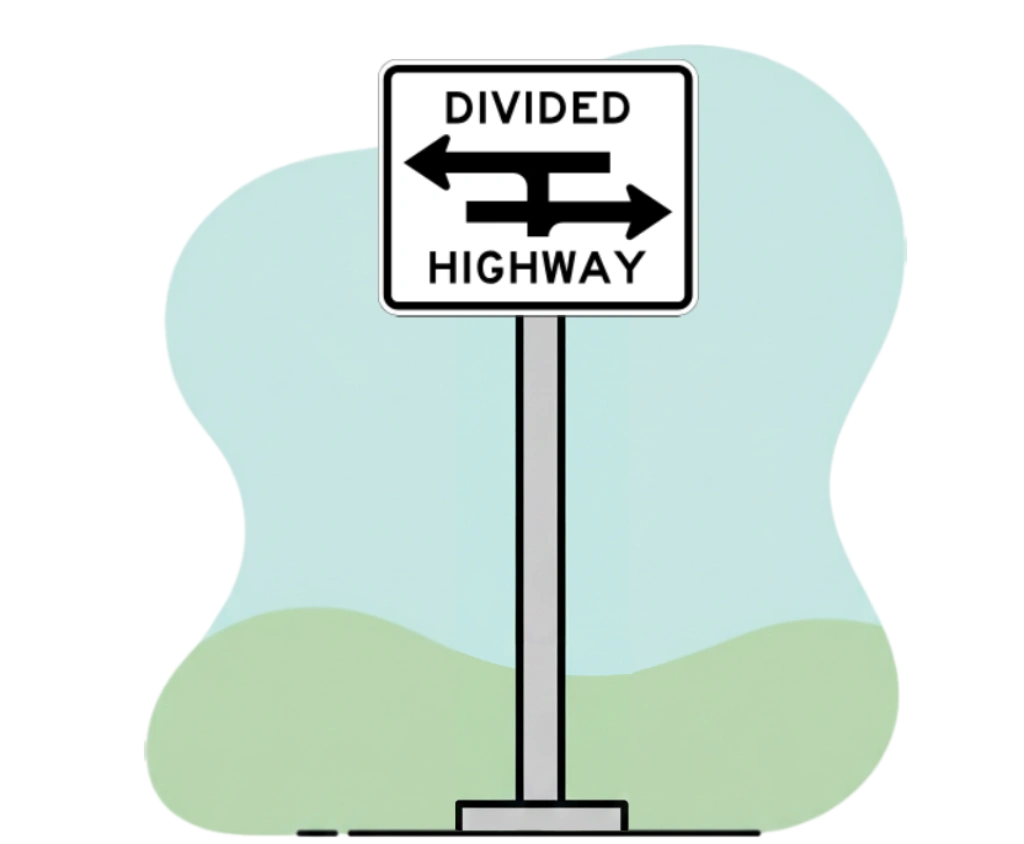
This sign is used on approaches to a divided highway. It informs you that a median separates both directions of traffic on the road you are going to turn onto or cross.
What does the sign indicate?
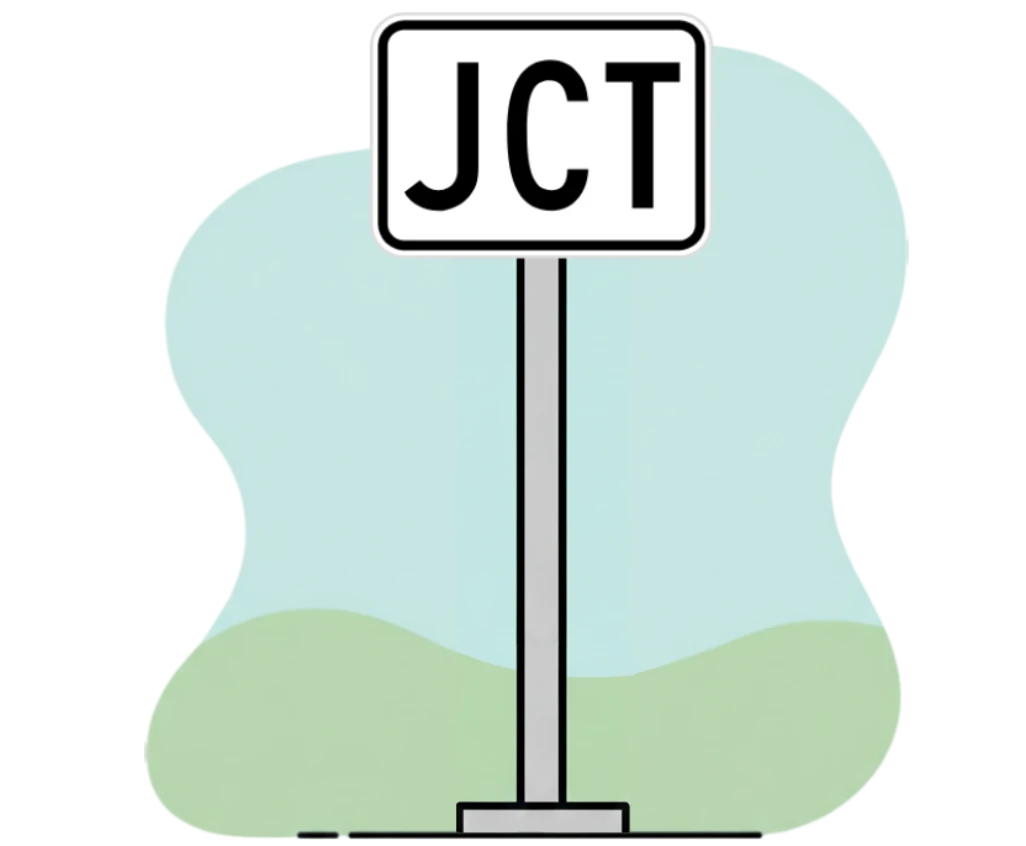
The sign indicates a location where two roads intersect or connect. This is important for drivers to plan their maneuvers in advance, choose the correct direction, or understand that they are approaching an intersection of two routes.
When turning left from a one-way street onto another one-way street to the left at a red light after a complete stop, who must yield?
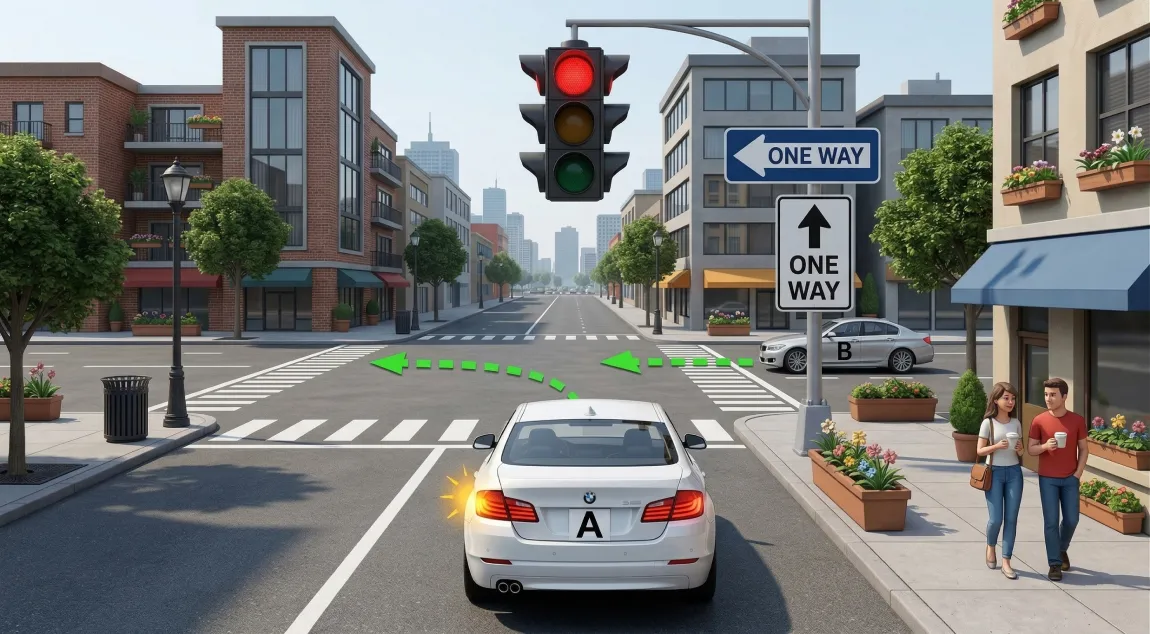
A left turn from a one-way street onto another one-way street to the left on a red light is allowed only after a complete stop and when there are no obstacles such as vehicles, pedestrians, bicyclists, or emergency vehicles.
What is the typical direction of one- or two-digit even-numbered interstate highways?
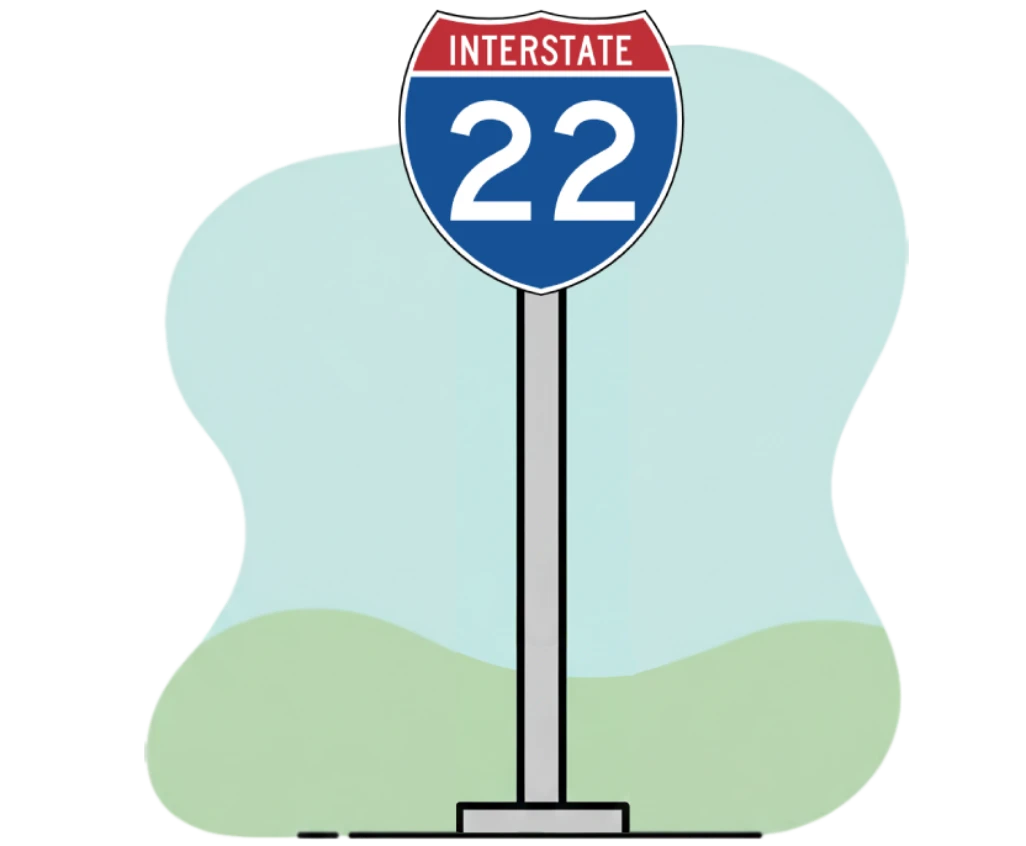
One- or two-digit even-numbered interstates generally run east to west. Numbers increase from the south to the north of the country.
What does this sign mean?
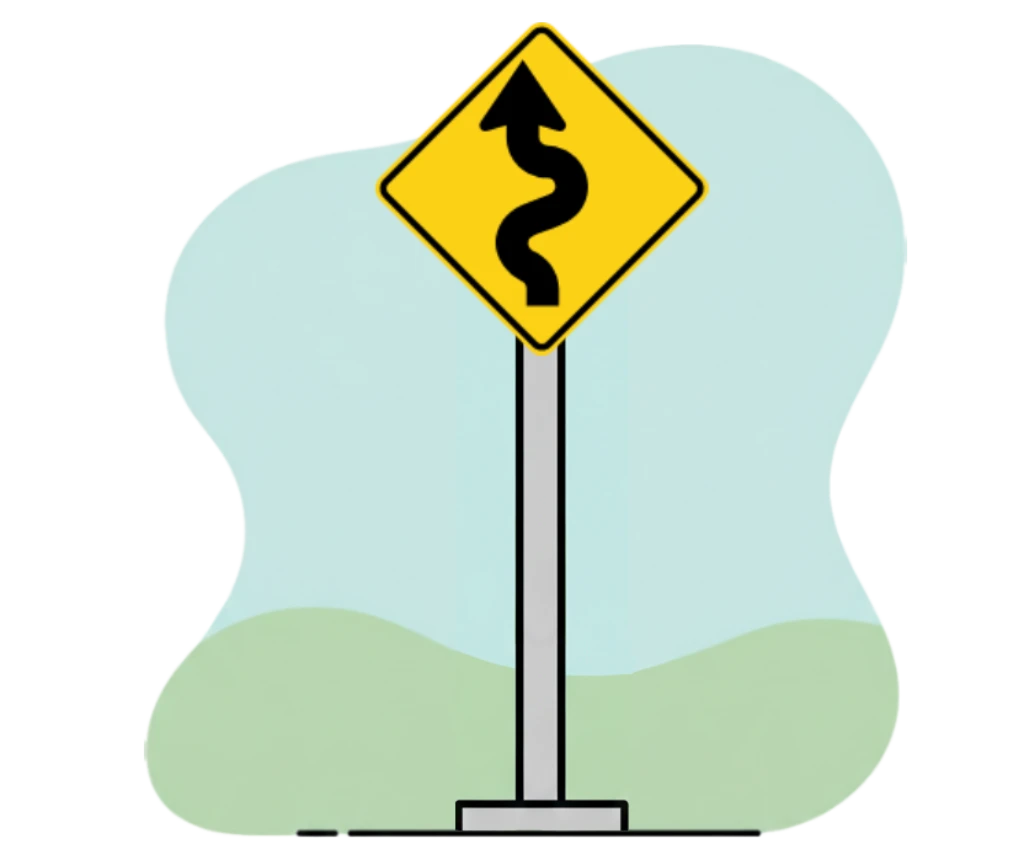
The Winding Road sign indicates that there are three or more curves on the road ahead.
What do these signs warn about?
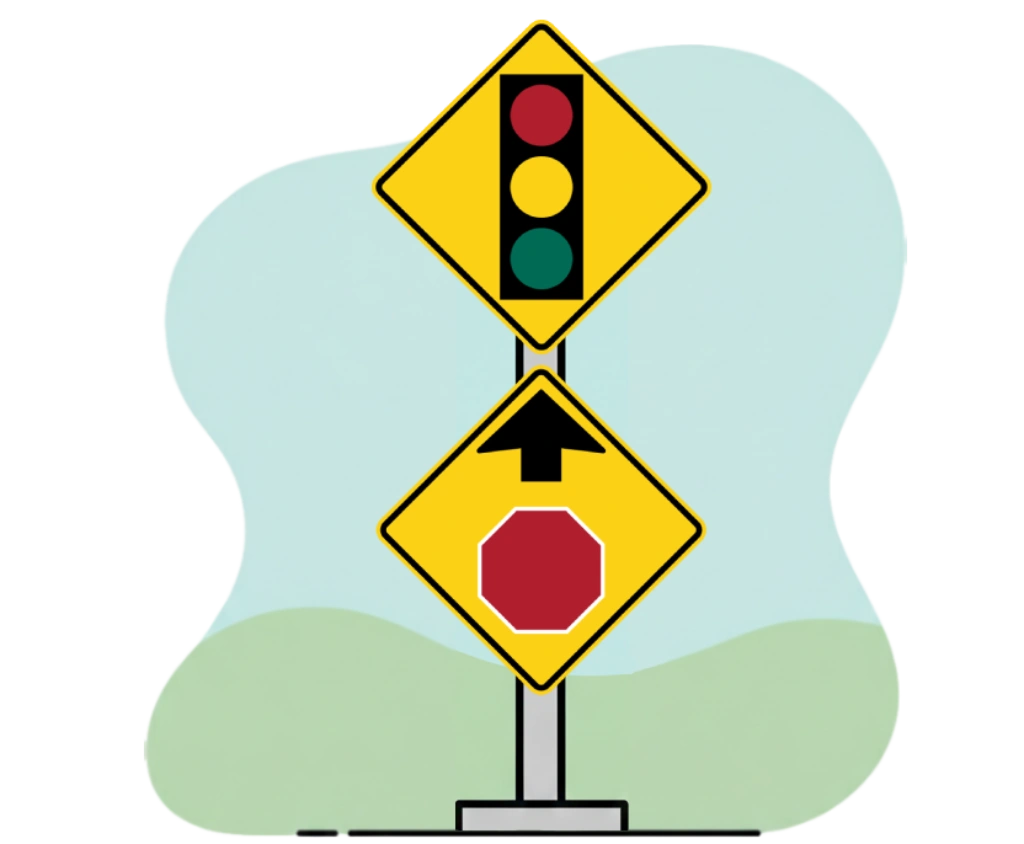
These signs warn drivers of approaching controlled areas of the road, such as stop signs, yield signs, or traffic signals, where they need to reduce speed or take specific actions.
What should you do when approaching a stopped emergency or service vehicle with flashing warning lights?
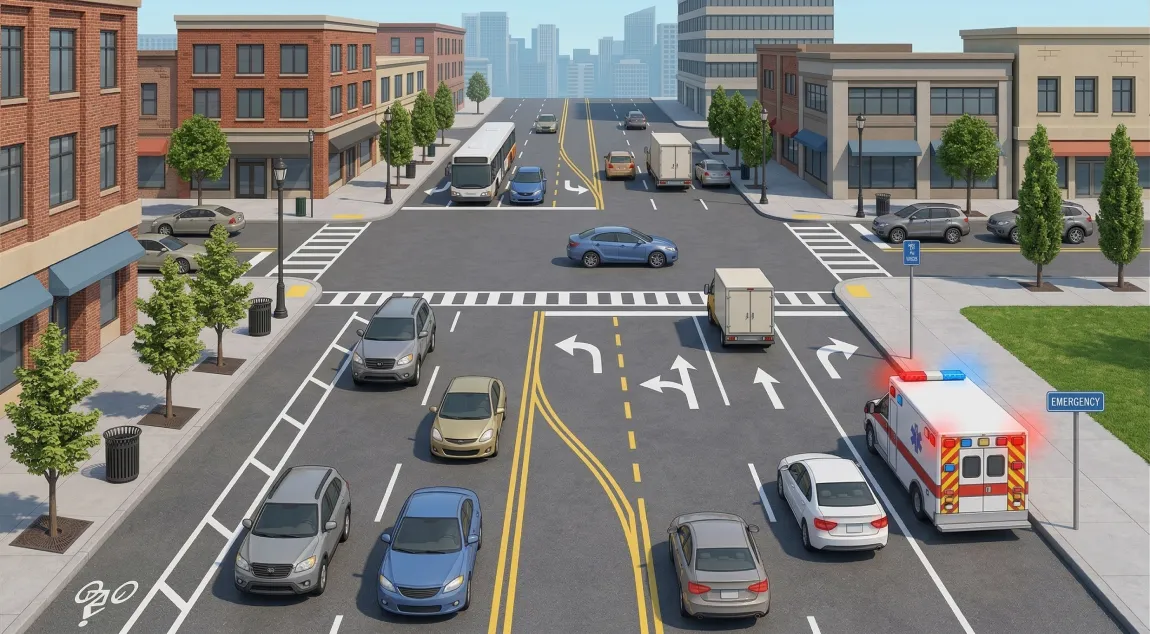
When approaching a stopped emergency vehicle or service vehicle with flashing warning lights, you must yield the right-of-way, change to a lane further away from the vehicle if possible, and proceed with caution. If changing lanes is not possible, reduce speed and proceed with caution.
What does this sign warn about?
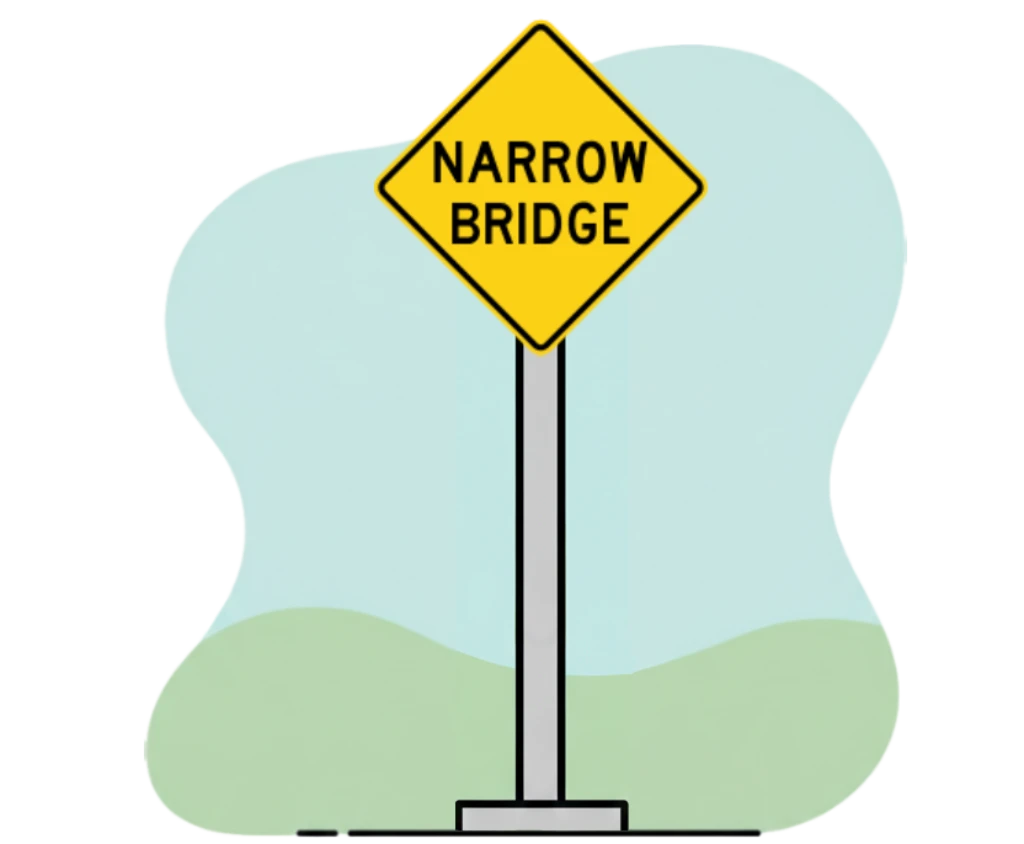
This sign warns you that you are approaching a bridge with a narrow roadway. The width of the bridge is typically 2 feet narrower than the width of the adjacent pavement.
What does this sign indicate?
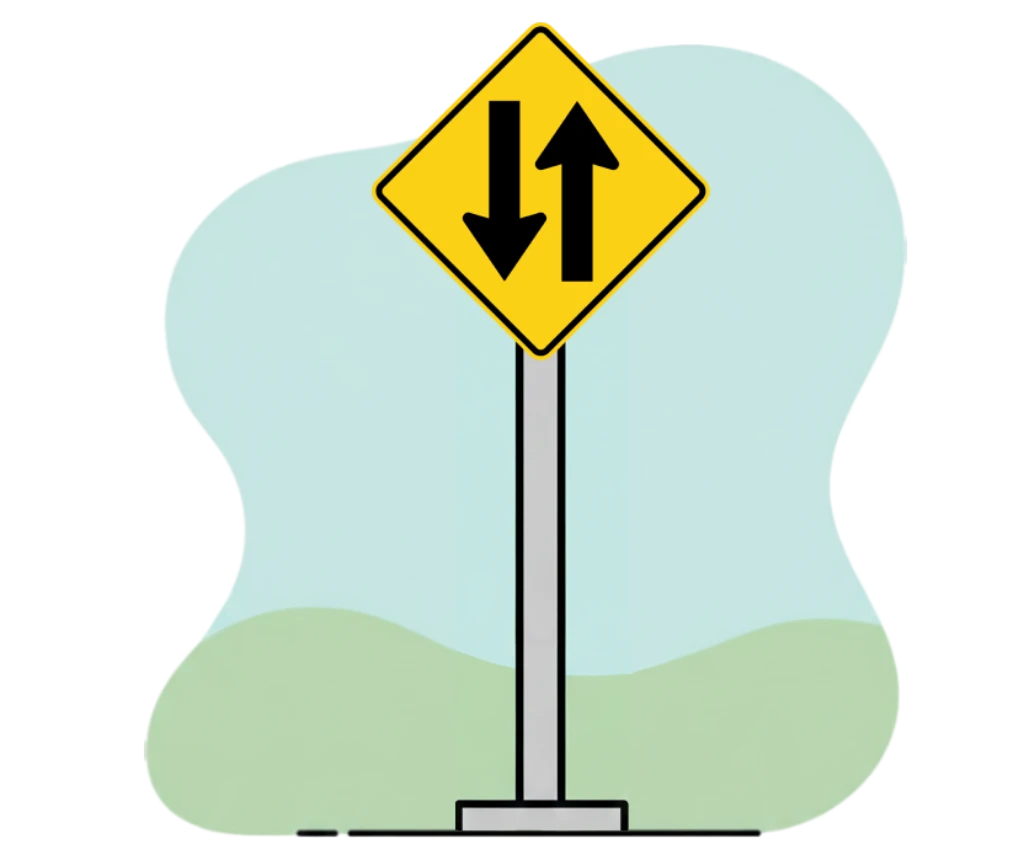
This sign informs you that you are leaving a divided roadway and approaching a two-way highway.
How do you get out of a locked-wheel skid if your vehicle has four-wheel anti-lock brakes (ABS)?
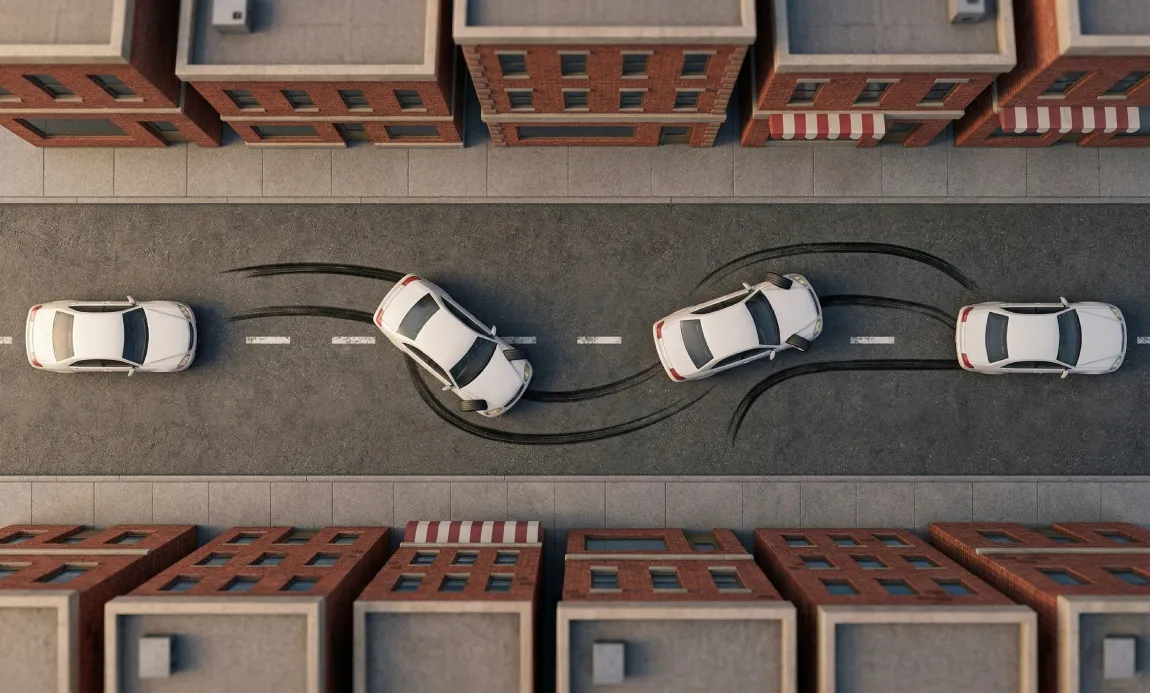
If your vehicle has four-wheel anti-lock brakes (ABS), apply firm pressure to the brake pedal to get out of a locked-wheel skid.
At a “T” intersection with no signs or signals, who must yield?
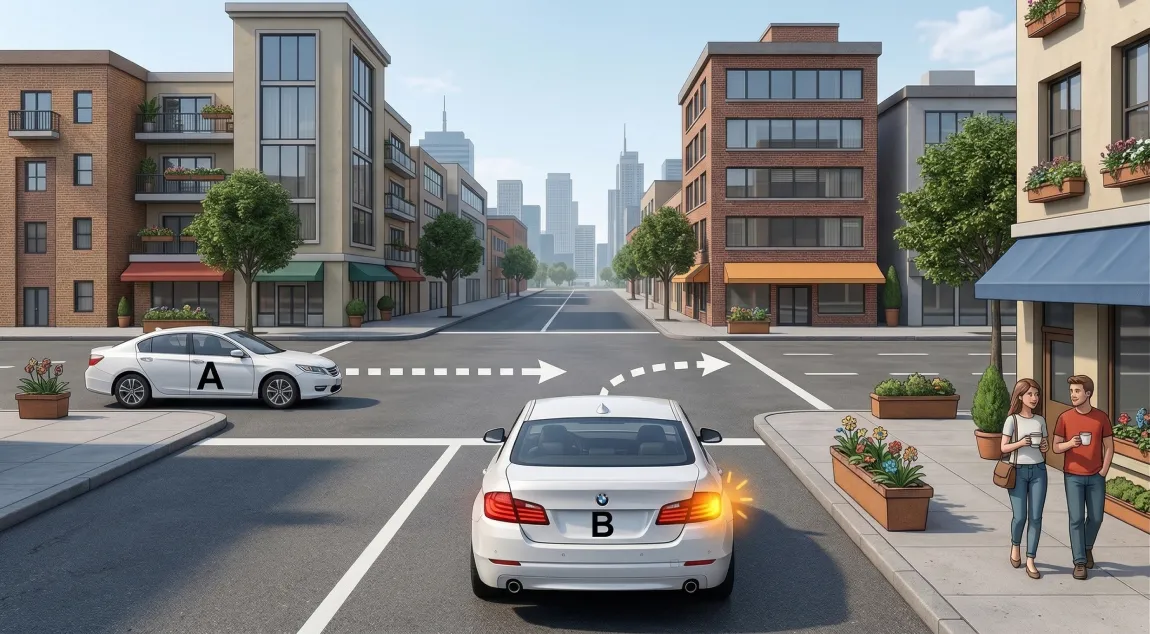
At a “T” intersection with no traffic signs or signals, a driver on the road that ends must yield the right-of-way to other drivers, bicyclists, or pedestrians before crossing traffic.
What is the purpose of warning lights and arrow boards?
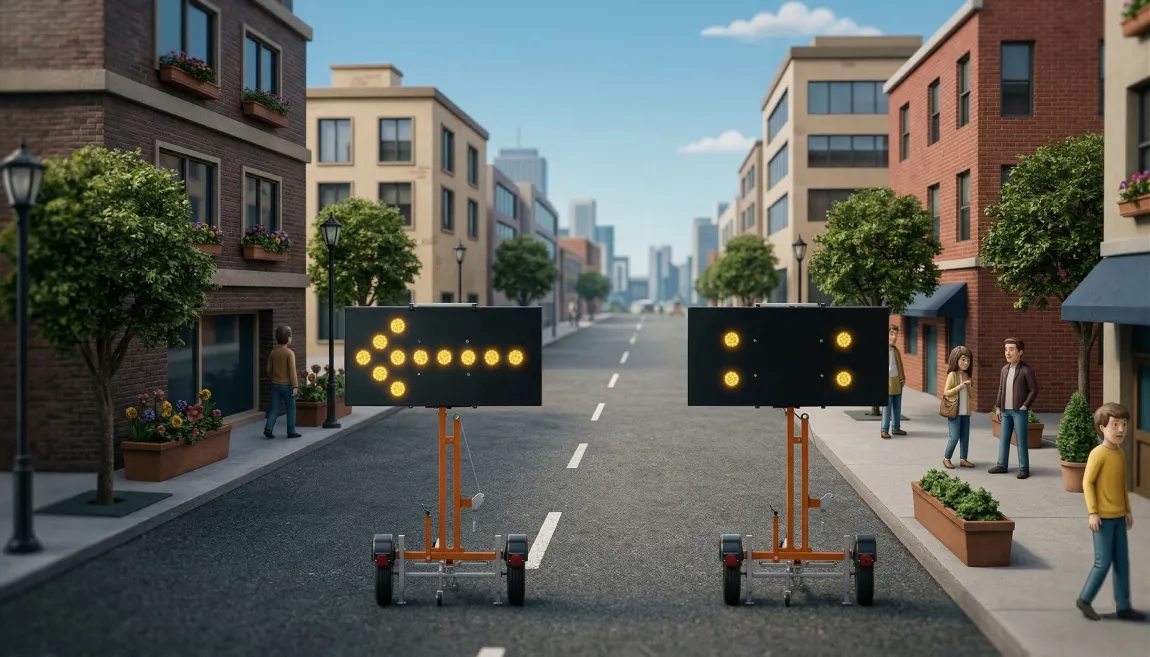
Warning lights help draw your attention to drums and barricades at night. Arrow boards warn drivers of an upcoming lane closure and, when construction is ahead, show the direction to merge or move.
What does a steady red light indicate?
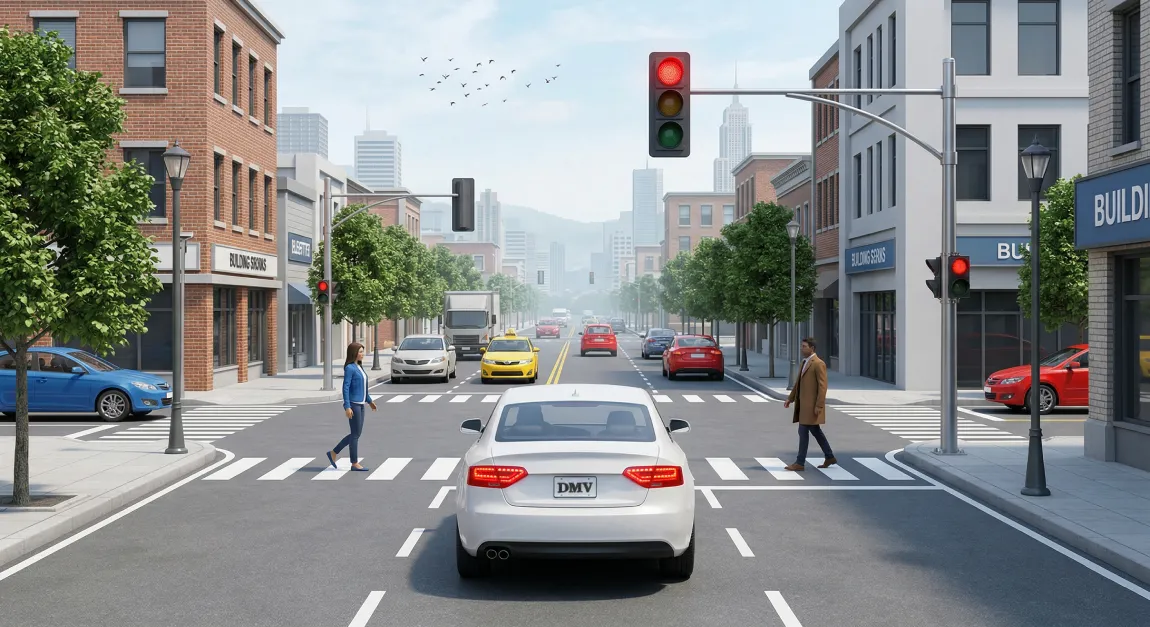
Red light — Stop at the marked stop line. If there is none, stop before the crosswalk. If there is no crosswalk, stop before entering the intersection. Do not proceed until the light turns green and the intersection is clear. Right turn on red is allowed unless a sign prohibits it. Left turn on red is also allowed when turning from a one-way street onto another one-way street going left. In both cases, you must come to a complete stop and yield to oncoming traffic and pedestrians.
What does a diamond-shaped sign with black inscriptions or symbols mean?
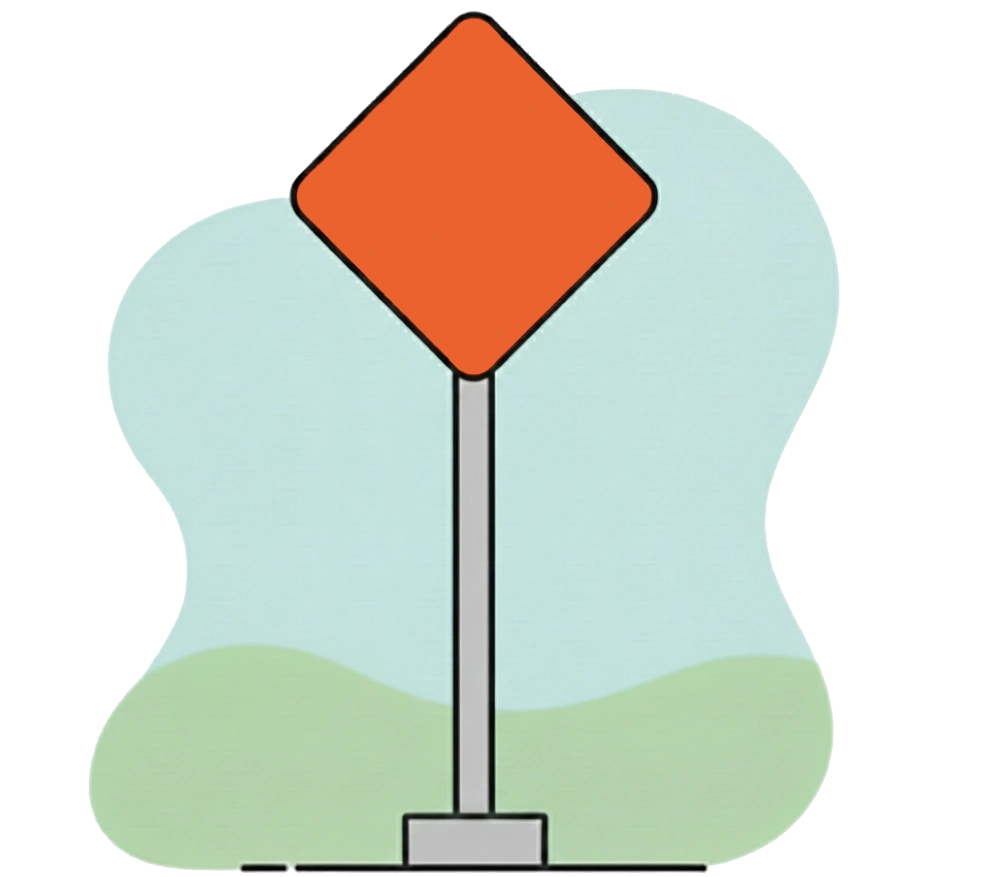
This diamond-shaped sign means warning. It may be yellow, yellow-green, or orange with black wording or symbols. This sign warns you about hazards or possible hazards on or near the roadway. Slow down and use caution when you see this type of sign.
What does a round sign with a black "X" and the letters "RR" mean?
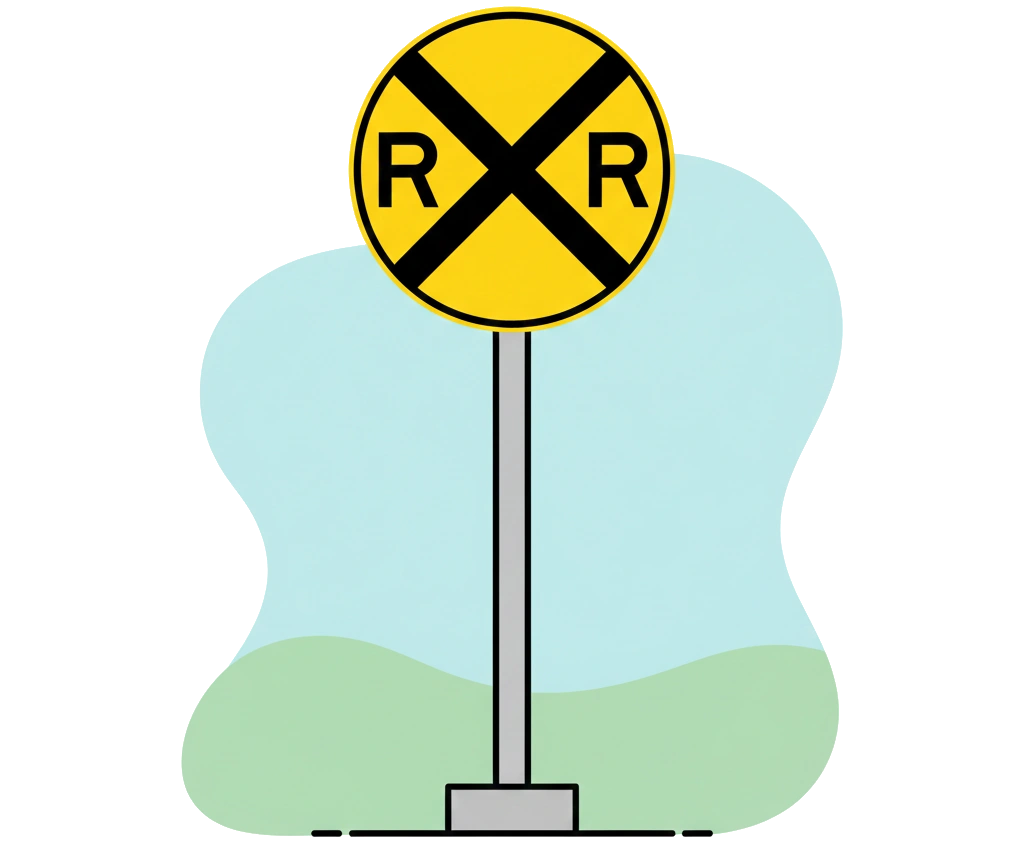
It is a warning sign indicating that a railroad crossing is ahead.
To whom must a driver yield the right-of-way in a road work zone?
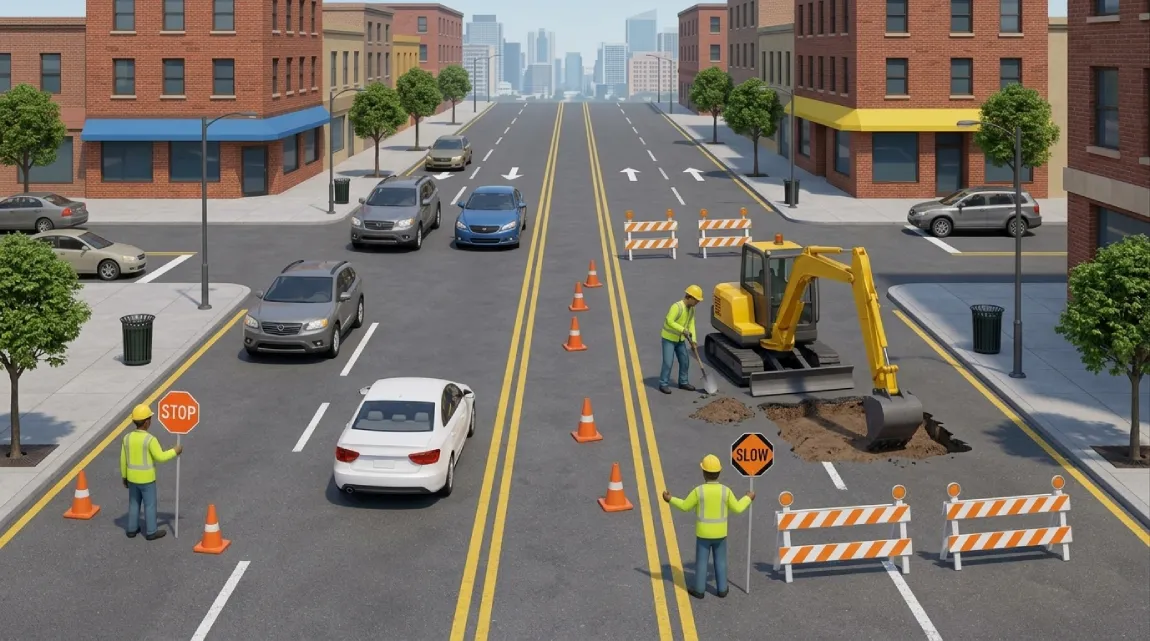
In road work zones, yield the right-of-way to personnel and service equipment with beacon lights. Instructions from flaggers with signs or flags are mandatory and take priority. When approaching equipment or people, move to a lane further away from them or slow down significantly.
What does this sign mean?
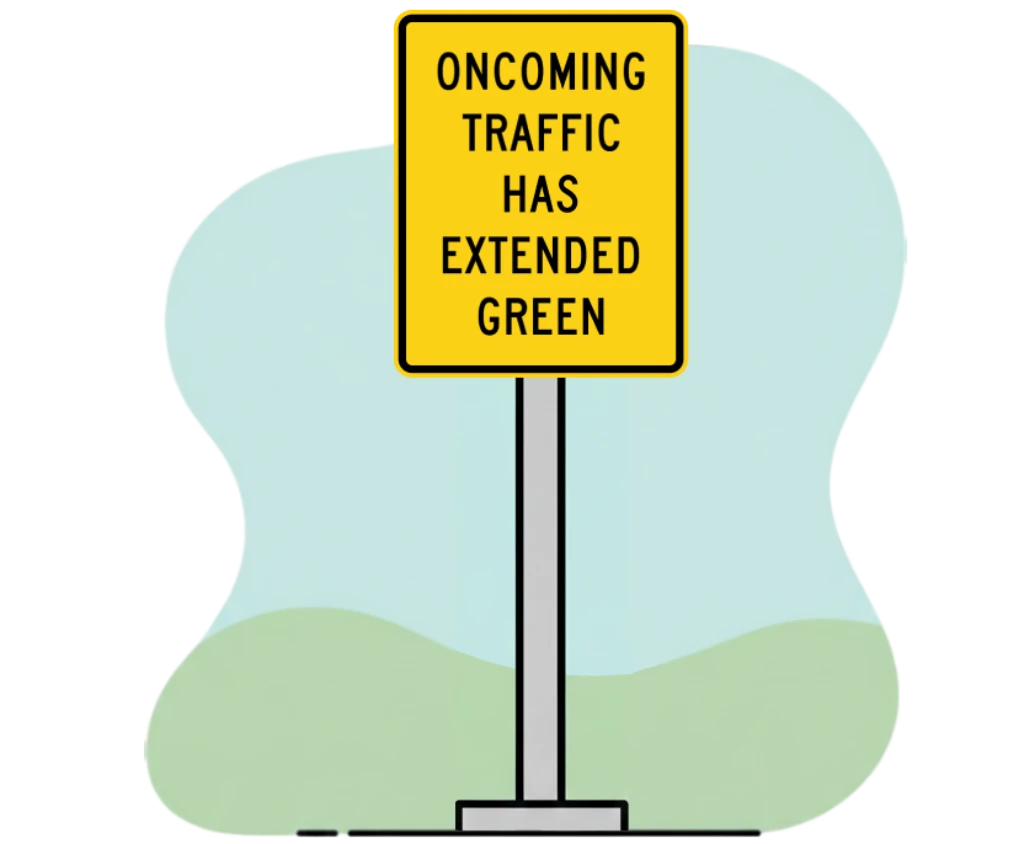
The "Oncoming traffic has extended green" sign is placed where oncoming traffic may continue to move after your traffic light turns red.
What should you do when you see a "One-Way" sign?
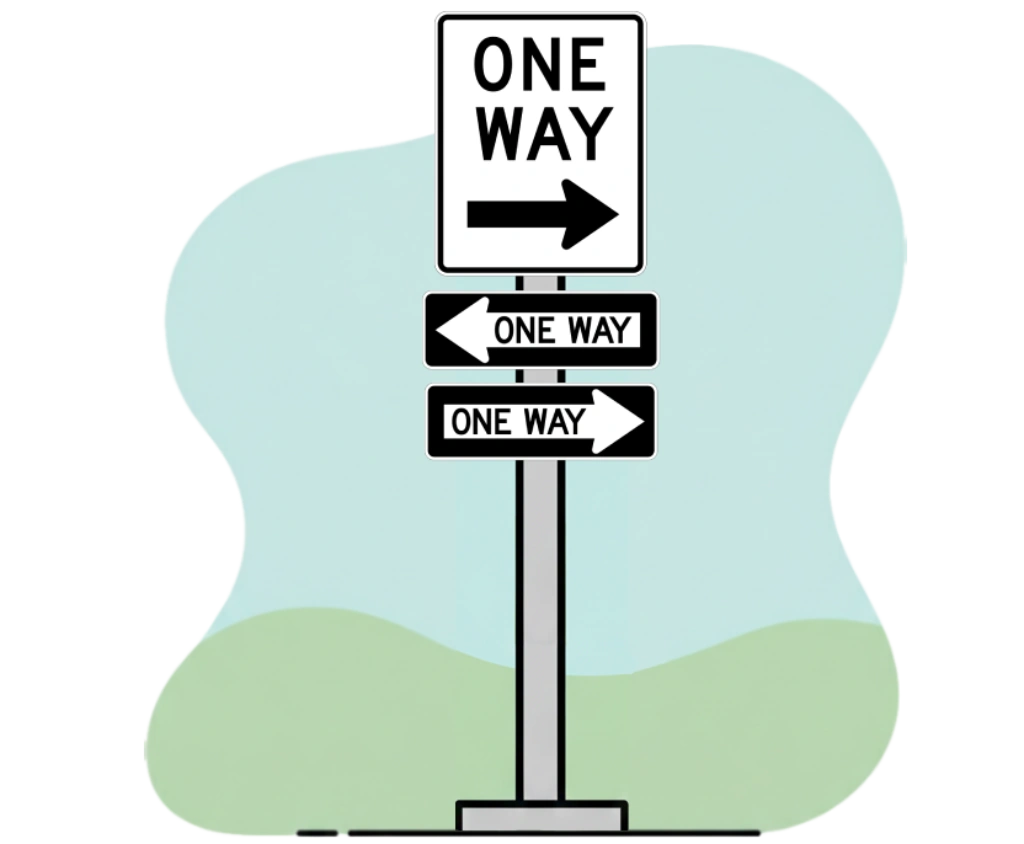
These signs are used on one-way streets or driveways. You must always go only in the direction of the arrow.
What does this sign indicate?
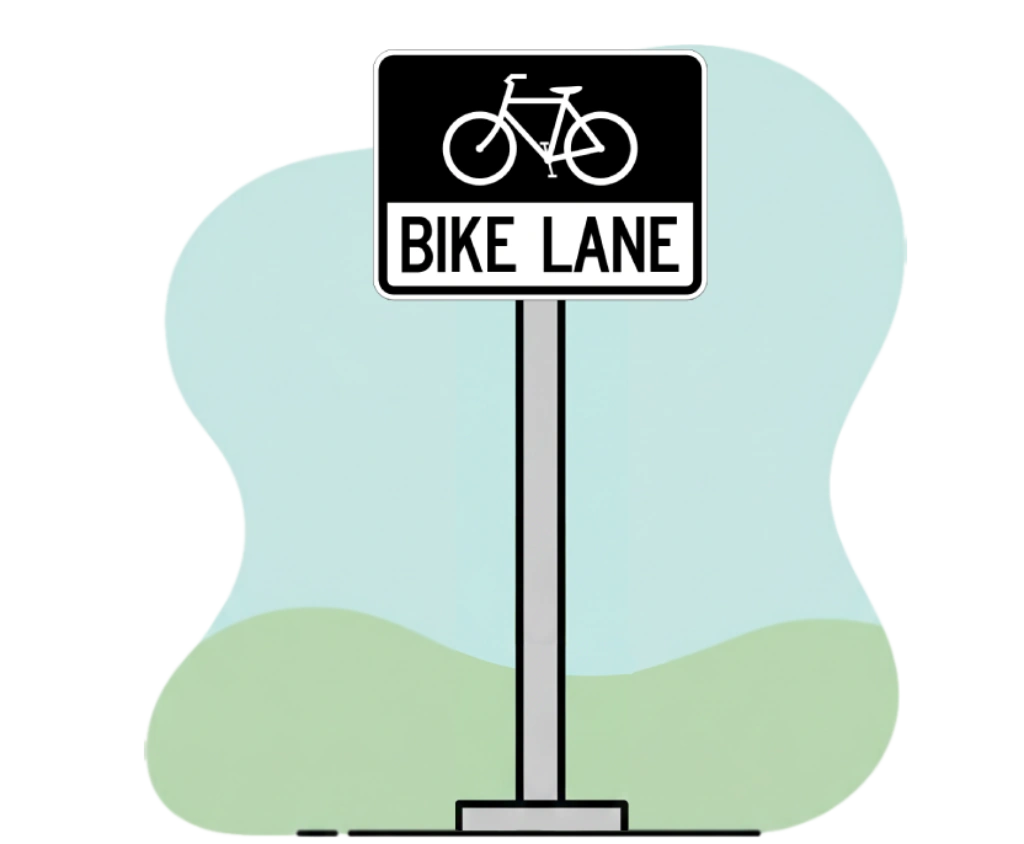
A bicycle lane is a designated traffic lane for bicyclists. These lanes are marked by a solid white line that becomes a dotted line ending before it reaches the corner. Bicycle lanes are sometimes painted a bright green color in order to increase visibility.
35
35 practice questions for the DMV permit test.
This is only a sample. More DMV practice questions are in the free app.
Get the app
80%
80% correct answers is the passing score on the DMV test. Every question on the California license exam has several answer options. Take our practice questions for the DMV test.

3
3 attempts per application. If all attempts in California fail, you just need to pay and submit a new application.
Official handbook
Do you prefer to study theory in a classic format? Take a look at the California Driver's Handbook. This is a free and official book from the California DMV. It is a great addition to your preparation.
Open the handbookThe key rules from the DMV, with a link to the source under each one.
The knowledge test is multiple choice, and to pass it you need 80% of your answers right.
If you're under 18, you can apply as early as 15½. You'll need a driver education certificate, and a parent or guardian has to sign your application.
When you go to the office, bring proof of identity and proof of where you live. There you'll pay the application fee, take a quick vision exam and have your photo taken. Come early: DMV offices don't start knowledge tests after 4:30 p.m.
You get three attempts at the knowledge test before you have to reapply. If you're under 18 and don't pass, you'll need to wait 7 days before trying again, not counting the day of the test.
The rules are in your state's driver handbook.
Six steps from practice in the app to your first try.
Download the app and prepare in it for the DMV practice test instead of a confusing thick book.
Download the app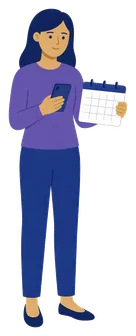
After you finish preparing, book an appointment and go to the DMV office to apply.
Book an appointment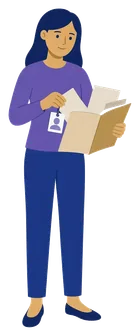
Get your documents ready ahead of time: proof of identity and proof of where you live.
Document checklist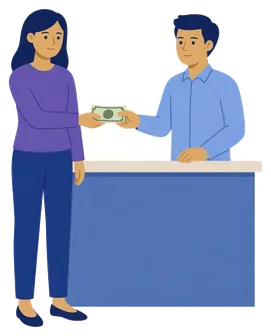
At the office, you'll pay the application fee, take a vision exam and have your photo taken.
Fees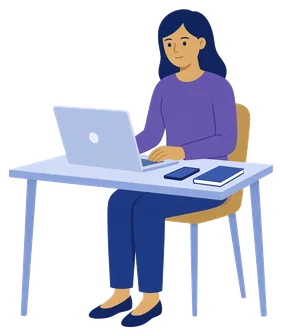
During the test you can't use any aids, so put the handbook and your phone away.
You have three attempts before you need to reapply.
Testing rulesRoad rules shown in real traffic situations: who goes first at an intersection, who has to yield, and how to turn and merge.
All Way Stop Rules & Right of Way
TWLTL & ONLY Turn Lanes
Lane Ends & Merge Rules
Railroad Crossing Rules
Merging Rules & Right-of-Way
DMV Test Helper
Yes, it's free. You get 35 questions, and if you miss one, you'll see the right answer right away.
No. DMV Test Helper is an independent app and isn't connected to any DMV or other state agency.
Get the free DMV Test Helper app: the full practice exam is waiting for you there. Tap your store below to install it.
All the rules are in the California driver handbook. You'll find a link to it below.
You need 80% of your answers right, and every question is multiple choice.
If you're under 18, you can apply as early as 15½. You'll need a driver education certificate, and a parent or guardian has to sign your application.
You have three attempts before you need to reapply. If you're under 18 and don't pass, you'll need to wait 7 days before trying again, not counting the day of the test.
The California driver handbook is on the DMV website in English, Spanish, Russian, Chinese, Vietnamese, Armenian, Hindi and Punjabi. Ask your local DMV office which languages you can take the test in.
Stop hunting for practice tests "for this year." Every time you open DMV Test Helper, the app syncs with the latest question bank. No outdated questions: you always study the rules that apply right now. Leave the doubts behind, download the app, and take a confident step toward your driver's license!

Point your phone camera at the QR code to open the App Store or Google Play.
or